
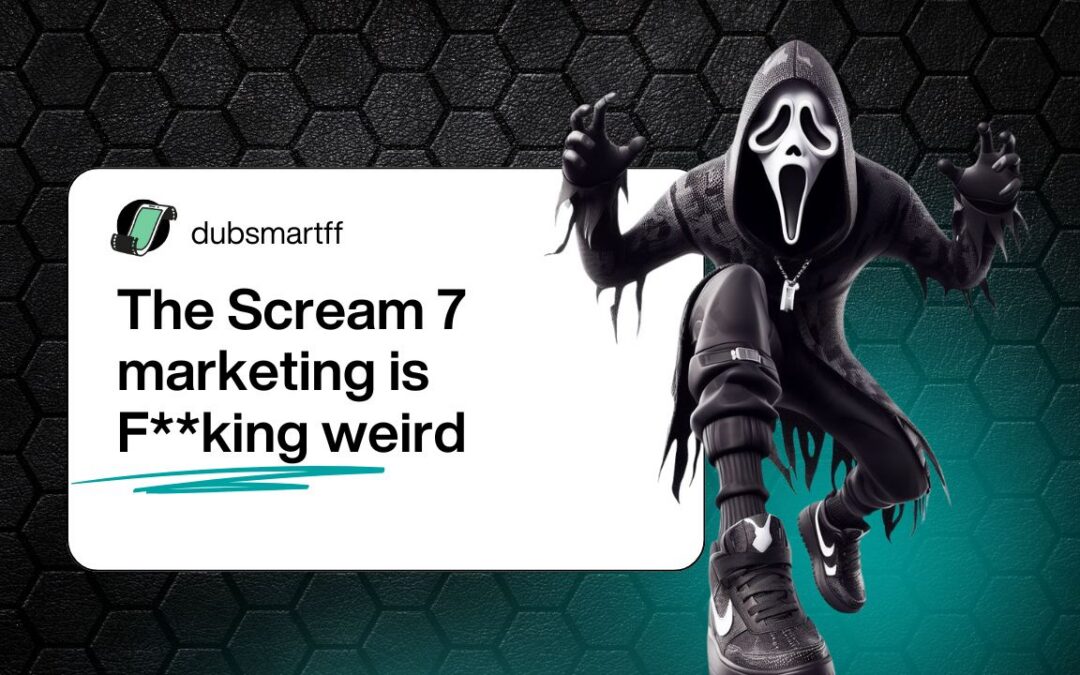
The Scream Franchise’s Marketing Identity Crisis
For decades, the Scream franchise has built its reputation on razor-sharp, postmodern horror commentary. When it kicked off in 1996, this low-budget horror film from a struggling Wes Craven, featuring a cast of mostly television stars, had little hope of scaring up serious box office numbers. Yet its winning combination of smart satire, meta commentary, and genuinely suspenseful scenes propelled the film to $173 million (impressive money in 1996). Sequels followed quickly, and aside from one stumble (the enjoyably stupid Scream 3), the series has maintained consistent quality for three decades.
Why it worked: the series didn’t just scare audiences, it satirized the very tropes they were watching. For the first time, horror movie characters were aware of horror movies themselves, a smart move that instantly elevated their choices while opening a window to critique our collective obsession with media violence.
Thirty years later, we find ourselves on the eve of the seventh Scream film’s release. Even before the marketing campaign began, the film had already spawned a “Boycott Scream 7” movement (which you can read about here). Now, with the film releasing at the end of the month, Scream 7‘s marketing rollout reveals a troubling shift in film promotion—one that’s cynical, digitized, and facing massive fan backlash.
The Scream 7 Kalshi Controversy: Turning Horror Into Gambling
What Is the Kalshi Scream 7 Partnership?
The most recent Scream 7 controversy centers on Paramount’s partnership with Kalshi, a prediction-market platform that allows you to bet on literally anything. The campaign introduced faux “survival odds” for film characters, essentially turning character deaths into tradable commodities.
.@Kalshi, I am the one who determines the odds. #Scream7
.@Kalshi, I am the one who determines the odds. #Scream7
These odds and market are not real. For entertainment purposes only. pic.twitter.com/bbywz7JJWd
— Scream (@ScreamMovies) February 5, 2026
While Paramount included a disclaimer stating the markets were “for entertainment purposes only,” fans immediately recognized the ethical problem: partnering with what critics call a “pocket casino” to promote a horror movie.

Why Fans Are Calling It “Grotesque Marketing”
Horror fans didn’t see this as clever meta-commentary—they saw it as “laundering wagering aesthetics into engagement.” The backlash was swift and severe:
- Fans called the partnership “unethical and lame”
- Critics noted the franchise is “becoming what it used to satirize”
- The campaign was described as “turning death into a gamified scoreboard”
The timing made matters worse. Kalshi is currently facing legal scrutiny in Massachusetts and Tennessee over whether its business operates as unlicensed sports betting.
Meta AI and Scream 7: The Artificial Intelligence Angle
The Meta AI Scream 7 Promotion Explained
Adding to the marketing controversy is a collaboration with Meta AI. This tech-heavy approach has created anxiety among the fanbase, with some fans now theorizing that legacy characters like Stu Macher might return as “AI deepfakes” or digital hallucinations rather than actual characters. On top of that META AI now allows you to insert yourself into promo clips for the film, needless to say it’s all pretty weird.
I did it so you don’t have to.
This combination of AI marketing and gambling partnerships represents what fans call a “bleak” future for film promotion.
What Actually Works: Old-School Scream 7 Marketing
Traditional Marketing Wins with Horror Fans
Ironically, before the Kalshi and AI controversies, fans were praising the Scream 7 marketing campaign for its “brilliant” old-school approach.
Successful Scream 7 promotional elements include:
- Legacy TV spots featuring returning characters
- Classic horror movie posters
- Mystery-focused trailers that reveal minimal plot details
Fans consistently emphasize that “less is more” for a whodunit franchise. They want “little nuggets” of information to theorize about, not gamified engagement or AI gimmicks.
Why the Legacy Character Spot Worked
The Scream 7 legacy character promotional spot was hailed as “perfect” because it respected audience intelligence. For a murder-mystery franchise, preserving the mystery is essential.
The Future of Horror Movie Marketing: Two Divergent Paths
The Scream 7 rollout reveals two competing visions for film promotion:
Path 1: The Tech-Cynic Model
- Prediction markets like Kalshi
- AI collaborations and deepfake marketing
- Controversy-driven “engagement” that alienates core fans
Path 2: The Mystery Model
- Traditional trailers and posters
- Organic anticipation building
- Respect for franchise roots and audience intelligence
What Scream 7 Teaches Us About Movie Marketing
As the backlash to betting odds and AI promotions demonstrates, audiences reject when “meta” becomes “bleak”.
With Paramount planning on doubling down on AI for marketing Studios hoping to preserve their franchises need to abandon algorithmic manipulation and odds-tickers. As the Scream fanbase has declared loudly: they want to guess who the killer is they don’t want to bet the house on it.
Download our guide to marketing your film old skool here